
Get Back to the Activities That Depend on Your Knees
Your knees help absorb and control forces every time you stand, walk, climb stairs, squat, or change direction. When knee pain begins affecting those movements, you may find yourself thinking twice before taking the stairs, exercising, kneeling, or keeping up with a busy day. At Ability Physiotherapy & Wellness, knee pain relief in South East Calgary, AB and North East Calgary, AB is centered on understanding how your knee responds to activity and building the strength and control needed for better function. We focus on what you want to get back to doing and develop care around those demands.
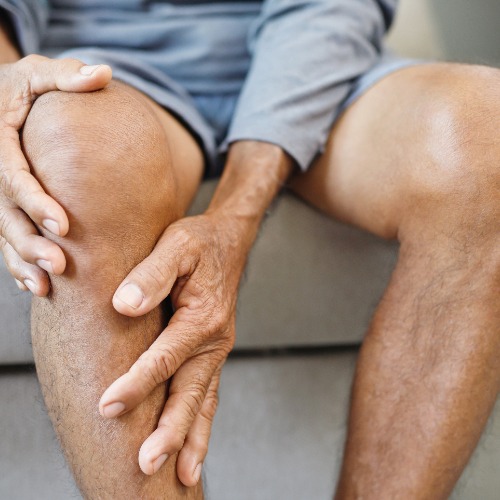
Why Your Knee May Become Sensitive
The knee is built to tolerate substantial forces during everyday movement and exercise. Symptoms can appear after an injury, a sudden change in training, repeated physical demands, or a period when the muscles supporting the knee have lost some capacity. Joint and tissue changes that develop over time may also contribute to symptoms for some people.
A painful knee is not automatically a damaged knee that needs to be protected from normal activity. How much your knee can currently tolerate matters, and that capacity can often be improved. Strength, movement control, activity levels, previous injuries, and the demands of your work or recreation all provide useful information when deciding where treatment should begin.
Factors that may be associated with knee discomfort include:
- A rapid increase in walking, running, jumping, or exercise.
- Reduced strength in the muscles around the knee and hip.
- Previous ligament, meniscus, or other knee injuries.
- Repeated kneeling, squatting, or stair use.
- Changes in activity after a period of reduced movement.
- Joint changes associated with osteo arthritis or aging.
Recognizing Common Signs of Knee Pain
Knee symptoms may become more noticeable during activities that require the joint to control body weight. You might experience:
- Aching around or behind the kneecap.
- Discomfort when going up or down stairs.
- Stiffness after sitting for an extended period.
- Swelling or a feeling of fullness after activity.
- Difficulty squatting, kneeling, or getting up from a low chair.
- A feeling that the knee is less steady during turns or changes in direction.
- Clicking, popping, or grinding during movement.
- Reduced confidence during running, jumping, or recreational activities.
Developing Strength and Control for Everyday Movement
Your physiotherapist looks at more than the painful spot on your knee. We assess strength, mobility, balance, walking, and the way your knee responds during activities such as stepping, squatting, or changing direction. For active patients, we may also evaluate running, jumping, or sport-specific movements when those skills relate to your goals.
Treatment may include:
- Strengthening for the knee, hip, and surrounding muscles to improve lower-body capacity.
- Progressive loading to prepare your knee for stairs, squatting, work, exercise, or sports.
- Mobility work when restricted movement is affecting function.
- Balance and coordination training when stability or control needs improvement.
- Hands-on techniques when appropriate to support comfortable movement within an active program.
- Functional exercises that become more demanding as your knee is ready for greater activity.
A Practical Approach to Your Progress
At Ability Physiotherapy & Wellness, personalized physiotherapy means your program is based on the demands your knee needs to meet outside the clinic. Someone returning to running may need a different progression than someone whose main goal is getting up from the floor or managing stairs comfortably. Your priorities give us a meaningful way to measure success.
You can expect our team to:
- Learn which knee movements are creating the greatest challenges for you.
- Explain your findings without using language that makes your knee seem fragile.
- Progress exercise according to your response and functional goals.
- Give you strategies for staying active while your knee builds greater capacity.
Your First Step Toward Better Knee Function
During your initial appointment, we discuss your symptoms, activity history, previous knee problems, and the movements you want to improve. Your therapist may assess knee mobility, lower-body strength, balance, walking, and tasks that reproduce your concerns. This allows us to see how the knee performs as part of the entire lower extremity rather than evaluating it in isolation.
Imaging can provide useful information when it is clinically relevant, but the way your knee currently moves and functions also matters. Your evaluation helps us determine an appropriate starting point and identify clear markers for progress. Patients looking for knee pain relief in South East Calgary, AB and North East Calgary, AB receive care focused on increasing what their knees can confidently handle in everyday life.
Frequently Asked Questions
Put More of Your Life Back in Motion
Knee pain can slowly reduce how much you walk, exercise, work, or participate in recreational activities. You do not have to measure progress by discomfort alone. Improving strength, control, mobility, and function can all represent meaningful changes. Contact Ability Physiotherapy & Wellness to schedule an assessment if knee pain is keeping you from moving the way you want. We can help you build a plan for greater confidence during the activities that depend on your knees.

THE ABILITY WAY
Care That Starts With You
We believe your care should never be one-size-fits-all. Every plan is shaped around your story, your goals, and the way you want to move through life.
- One-on-one personalized care
- A plan built around your goals
- Hands-on treatment and movement support
- Education to support lasting progress