

Healing from the Inside Out with Visceral Fascia Mobilization
Do you ever feel tightness throughout your midsection, but find that even the deepest stretches don’t do much to resolve it? Or maybe you struggle with persistent digestive issues, like constipation or bloating. You might think these issues are unrelated–but in some cases, they could stem from restrictions in your visceral fascia.
Most people aren’t familiar with this tough, flexible tissue, but it runs throughout their body, including around their internal organs. When it becomes restricted, your body can feel guarded, stiff, and sore in ways that don’t always correspond to a single muscle or joint.
Fortunately, you do have options for addressing that restriction, including visceral fascia mobilization at Ability Physiotherapy. Let’s take a closer look.

Everything You Need to Know About Your Visceral Fascia
Your visceral fascia is a web of connective tissue that surrounds and supports organs like the stomach, intestines, bladder, uterus, and liver. It also links your organs to nearby muscles, ribs, spine, and pelvic structures and carries your nerves, blood vessels, and lymphatic channels through the region.
This means that every part of your body is connected by your fascia, which is why it can contribute to pain signals, movement patterns, and protective tension. That’s especially true when it becomes restricted, and signals from the fascia are felt in nearby muscles and joints. That’s why an internal restriction can show up as rib pain, hip tightness, or low back symptoms.
Causes of Visceral Fascia Restriction
- Adhesions from surgery or other scarring, which can reduce the glide between tissue layers
- Inflammation or infection that causes tissues to become more sensitive and reactive
- Injury, repetitive strain, or prolonged sitting
- Pregnancy and postpartum-related changes
- High stress and shallow breathing, both of which can cause an increase in abdominal tension
Signs of Visceral Restriction
- A pulling, pinching, or deep ache in the abdomen, ribs, low back, hips, or pelvis
- Stiffness with twisting, backbends, deep breaths, or prolonged sitting
- Symptoms that seem to move around your body or feel hard to pinpoint
- Digestive discomfort, especially alongside back or pelvic pain
Exercise of the Month
Diaphragmatic Breathing
(Core Stability, Fascia Health)
Begin by either lying on your back with knees bent and feet flat or sitting up straight in a cross-legged position. Place one hand on your chest and the other on your belly. Breathe in slowly through your nose, allowing your belly to rise while keeping your chest relatively still. The hand on your belly should move more than the hand on your chest. Exhale slowly through pursed lips, feeling your belly fall. Focus on deep, relaxed breaths that engage your diaphragm and promote fascial mobility. 3 Sets, 10 Breaths.

A Hands-On Solution: Visceral Fascia Mobilization
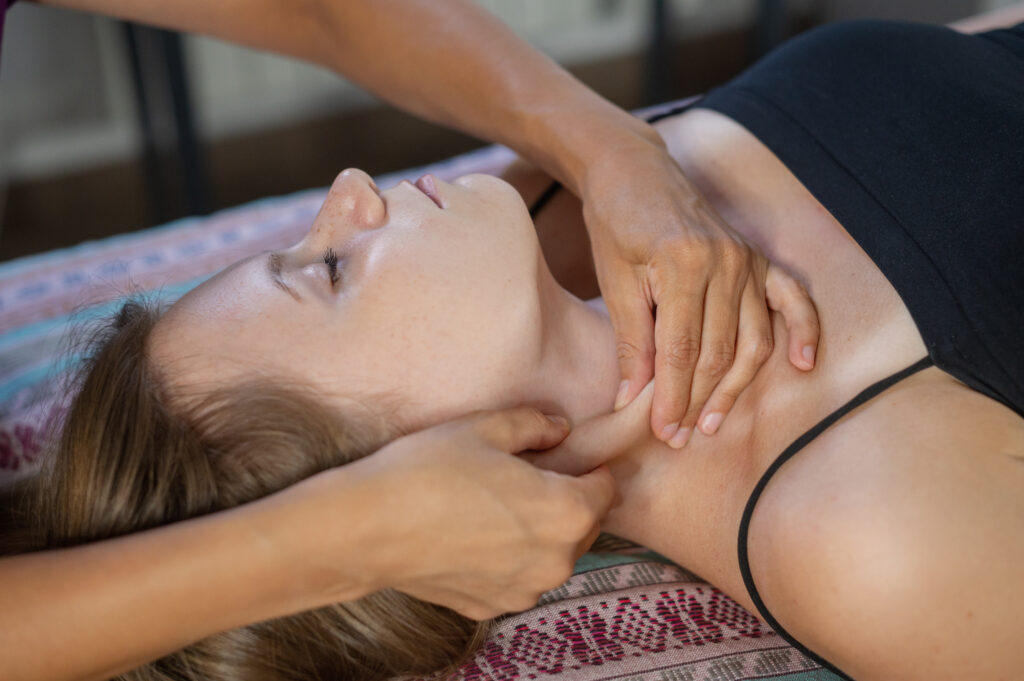
At Ability Physiotherapy, we take pride in offering hands-on, non-invasive treatment options to enhance mobility and alleviate pain. One of these is visceral fascia mobilization, which directly targets restrictions in your visceral fascia that may be causing you discomfort. This technique utilizes precise, gentle input to enhance tissue mobility, decrease sensitivity, and help your body release tension, making movement feel easier and more comfortable.
How Does Visceral Fascia Mobilization Work?
1) It restores “glide” between tissue layers.
Your organs and the connective tissues around them are meant to slide against each other as you breathe and move, which is why restriction in the fascia can cause problems. Our therapists use gentle, sustained pressure and specific hand placements to encourage the tissue to become more pliable. As a result, you feel less pulling or tightness when twisting, bending, and engaging in deep breathing.
2) It downshifts protective muscle guarding
When the nervous system senses a threat, such as pain or inflammation, it can create a brace through the abdomen, ribs, pelvic floor, and back that persists long after the original trigger. Slow, well-tolerated mobilization techniques can serve as a safety cue to the brain and spinal cord, reducing the need for protective tension.
3) It changes how the area sends and receives pain signals
Fascia is rich in sensory nerves. Restricted or sensitive fascia can amplify discomfort and even contribute to referred pain that you feel in nearby areas, such as the back, ribs, hips, or pelvis. Mobilization can reduce local sensitivity and improve how the nervous system processes signals coming from that region.
4) It improves movement patterns that depend on the trunk.
When your diaphragm and abdominal tissues function more efficiently, breathing mechanics and trunk coordination often improve, reducing strain on the lower back, ribs, and pelvis during everyday tasks.
Nourish Your Fascia: Anti-Inflammatory Turmeric Bowl

Ingredients:
1 cup quinoa, cooked
1 cup roasted sweet potato cubes
1 cup steamed broccoli
½ cup chickpeas
2 tbsp tahini
1 tsp turmeric
1 tbsp lemon juice
2 tbsp olive oil
Fresh ginger, minced
Sea salt and black pepper
Instructions:
Combine quinoa, sweet potato, broccoli, and chickpeas in a bowl. Whisk together tahini, turmeric, lemon juice, olive oil, ginger, salt, and pepper. Drizzle over the bowl and toss gently. This anti-inflammatory meal supports fascial health and digestive wellness.
Ready to Feel Better and Move Easier?
If you’re struggling with symptoms that aren’t improving, despite regular stretching, visceral fascia mobilization may be a helpful next step, particularly when our team incorporates it into a comprehensive care plan that includes breathing, movement, and strength training.
To get started, schedule an appointment with Ability Physiotherapy today. We’ll perform an in-depth assessment and develop a care plan tailored to your body and goals.
Sources: https://www.sciencedirect.com/science/article/pii/S1360859225004048, https://ojs.zu.edu.pk/pjr/article/view/988