

Sprains Vs Strains Vs Repetitive Stress Injuries
From Ankles to Knees to Wrists, Learn How To Tell Which Injury You Have
The majority of us have experienced that twinge of pain after an awkward movement or a day of repetitive tasks. Maybe you twisted your ankle during a hike, felt a sharp pull in your back after lifting something heavy, or noticed a dull ache in your wrist after hours of typing. No matter your injury, our physiotherapists will take the time to explain the type of injury you have and show you how physiotherapy can help you recover stronger than ever.


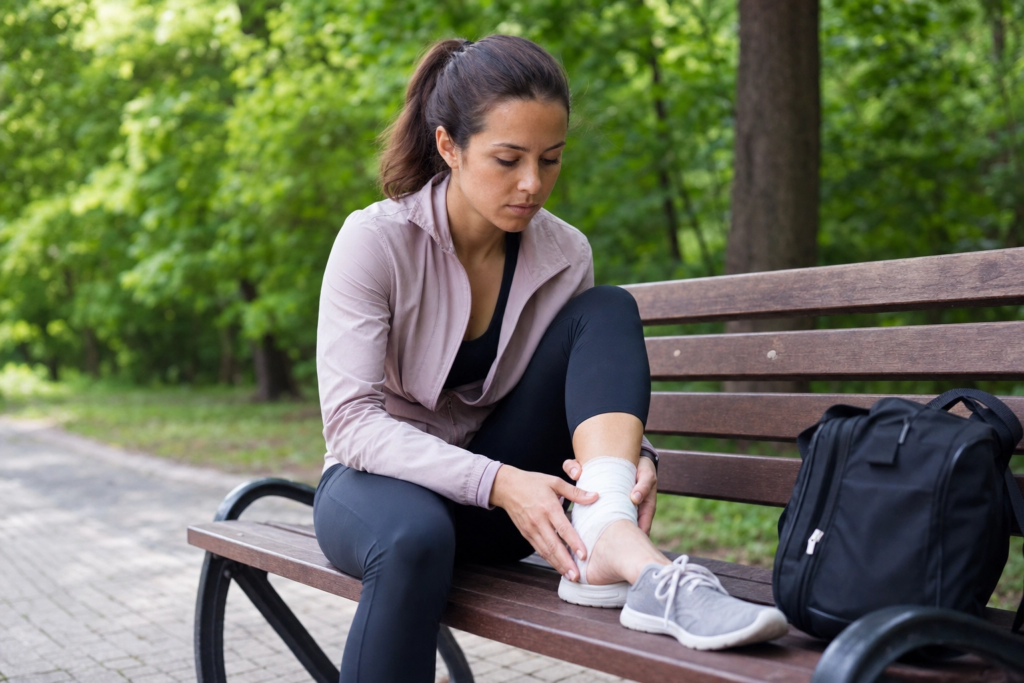
Strain vs. Sprain vs. Repetitive Stress Injuries
When it comes to sprains, strains, and repetitive stress injuries, it can be difficult to understand the differences between each one – but we’re here to help!
Sprains
- A sprain is an injury to a ligament, the tough bands of tissue that connect bones to each other at a joint.
- Sprains typically occur when a joint is forced beyond its normal range of motion, causing the ligament to stretch or tear.
- Common symptoms of a sprain include pain, swelling, bruising, and difficulty moving the affected joint.
- Ankle sprains are the most common type of sprain, often caused by twisting or rolling the ankle.
Strains
- A strain is an injury to a muscle or tendon, the fibrous cords that attach muscles to bones.
- Strains usually happen when a muscle is overstretched or overworked, causing the muscle fibers or tendon to tear.
- Symptoms of a strain can include pain, muscle tightness, muscle weakness, and spasms.
- Back strains are a frequent type of strain, often caused by improper lifting or sudden movements.
Repetitive Stress Injuries (RSIs)
- RSIs are a group of disorders that occur from repeated movements or overuse of a particular muscle, tendon, or nerve.
- RSIs develop gradually over time, and symptoms can worsen if the repetitive activity continues.
- Common symptoms of RSIs include pain, numbness, tingling, weakness, and loss of function in the affected area.
- Carpal tunnel syndrome, tendonitis, and tennis elbow are examples of RSIs.
Causes and Risk Factors
Several factors can increase your risk of experiencing a sprain, strain, or RSI:
- Sprains: Participating in sports, wearing improper footwear, and having a history of ankle sprains can increase your risk.
- Strains: Overexertion, poor posture, and muscle fatigue can contribute to strains.
- RSIs: Performing repetitive tasks, using improper techniques, and having poor ergonomics in the workplace can lead to RSIs.
Injury Treatment At Ability Physiotherapy
If you’re experiencing pain or discomfort from a suspected sprain, strain, or repetitive stress injury, don’t wait any longer to begin treatment. Our experienced physiotherapists can help you get back to doing the things you love. We’ll create a personalized treatment plan to address your specific needs, including pain management, exercises to improve mobility and strength, and techniques to prevent future injuries.
Call us today to schedule an appointment and get back to your active lifestyle stronger than ever!

Preventing Sprains, Strains, & RSIs
Nobody enjoys the limitations and discomfort of sprains, strains, and repetitive stress injuries (RSIs), so it’s great news that many of these conditions can be prevented with some proactive measures. Incorporating simple strategies into your daily routine and being mindful of your body’s signals can significantly reduce your risk of experiencing these painful setbacks.
Warm-up and Cool-down
A proper warm-up can increase blood flow to your muscles, improve mobility, and reduce the risk of injury. Similarly, a cool-down helps your body gradually return to its resting state, which can help prevent muscle soreness and stiffness.
Listen to Your Body
Pain is your body’s way of signaling that something is wrong. Don’t ignore those aches and pains – they may be early warning signs of an impending injury. If you experience discomfort during or after an activity, stop and contact us for an appointment. Pushing through pain can exacerbate the problem and lead to more serious complications.
Mobility and Strength
Maintaining good muscle strength and range of motion can help protect your joints and reduce your risk of injury. Our PT programs will show you how to incorporate regular exercise into your routine that strengthens the muscles surrounding your joints and improves your overall range of motion.
Footwear and Protective Gear
Wearing appropriate footwear and protective gear can also help prevent injuries. Choose shoes that are meant for the activity you’re doing and fit properly. If you’re participating in activities that put you at risk for falls or impacts, wear protective gear such as helmets, knee pads, or wrist guards.
Contact us today for a personalized program with proactive steps to avoid sprains, strains, and RSIs. And if you do experience an injury, don’t wait to schedule your PT appointment with Ability Physiotherapy. We’ll help you get back to your activities stronger than before.
Exercise of the Month
Plank
(Core, Shoulders, Glutes)
Start by lying face down on the floor. Place your forearms under your shoulders and push up onto your toes and forearms, keeping your body in a straight line from head to heels. Engage your core and hold the position without letting your hips sag or rise. 3 Sets, 30-Second Hold. (Materials needed: floor mat)
Stop Guessing and Start Healing
Whether it’s a sudden ankle twist on the trail, a pulled back muscle from lifting, or a nagging wrist ache at your desk, don’t let an untreated injury hold you back. Our team at Ability Physiotherapy specializes in getting to the bottom of your pain—whether it’s a sprain, strain, or repetitive stress injury—and creating a personalized recovery plan tailored to your needs. Schedule an evaluation today and get back to the activities you love, stronger than ever.
Healthy Recipe: Anti-inflammatory Turmeric Smoothie

Enjoy the health benefits of turmeric with this Anti-inflammatory Turmeric Smoothie. You can have a healthy breakfast or snack with this delicious smoothie ready in minutes! There is no added sugar and fresh ginger, pineapple, and mango all provide even more anti-inflammatory powers.
Ingredients:
- 1 cup frozen pineapple
- 1 cup frozen mango
- 1-1 1/2 cups cold water
- 1 teaspoon coconut oil
- 1 teaspoon peeled, chopped fresh ginger
- 1 teaspoon turmeric paste
Instructions:
- Place all ingredients in blender.
- Blend on high speed until super smooth. Enjoy!
🛡️ Sprain, Strain & RSI Prevention Checklist
Check off the proactive measures you’ve incorporated into your routine to protect your joints, muscles, and tendons!
Safeguard Your Body Against Everyday Injuries
Whether you're hitting the hiking trails, lifting heavy groceries, or putting in long hours at your desk, your muscles and joints are working hard. Don't wait for a repetitive stress injury or a sudden strain to slow you down. A few simple adjustments to your routine and a targeted physiotherapy program can prevent the micro-traumas that lead to chronic pain. Schedule an appointment with Ability Physiotherapy today to learn how we can help you build resilience, move freely, and stay active all year long!